School Bus 2026: Routes, Driver Jobs, Tracking, Safety & DC Transit
Quick Answer
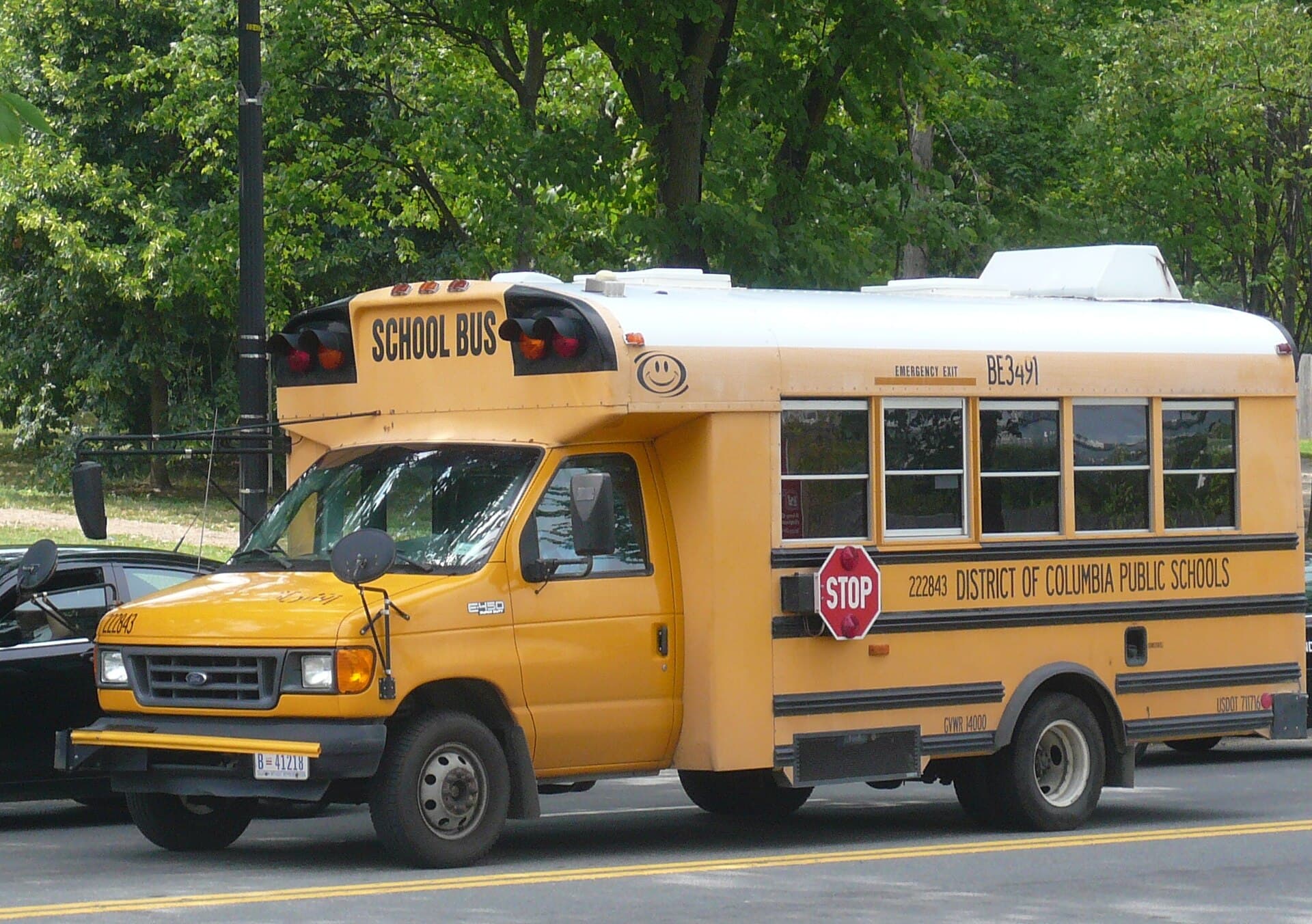
DCPS provides yellow school buses only to students with IEP transportation needs. All other DC students use Kids Ride Free - free Metro and Metrobus rides on school days. The US has 500,000+ school buses nationally; a standard school bus is 35–40 ft long, seats 48–90 students, and is painted National School Bus Glossy Yellow.
DCPS School Bus Service
DC Public Schools operates yellow school bus service primarily for students with disabilities whose Individualized Education Program (IEP) includes transportation as a related service. DCPS Transportation Services coordinates routes, bus assignments, and special-needs accommodations including wheelchair-accessible buses and paraprofessional aides on school bus routes.
General-education students in DCPS and DC charter schools do not receive dedicated school bus service. Instead, DC's Kids Ride Free program covers Metro and Metrobus for all enrolled DC students. This model differs from most US school districts, where yellow school bus service is standard for all students living beyond a walkability threshold (typically 1–2 miles from school).
How to Request School Bus for Your Child
- Ensure your child's IEP includes transportation as a related service
- The IEP team specifies type of transport needed (yellow school bus, taxi, Metro)
- DCPS Transportation Services assigns routes and sends confirmation before school year
- Contact DCPS Transportation: 202-671-0500 or dcps.dc.gov
School Bus Safety in DC
All DCPS school buses are inspected by the DC Department of Motor Vehicles twice yearly. School bus drivers hold a CDL Class B with Passenger (P) and School Bus (S) endorsements, pass background checks, and complete annual safety training. The National Highway Traffic Safety Administration (NHTSA) reports that school buses are 70× safer per mile than passenger cars for transporting students.
Bus routes are rerouted when streets close for construction, motorcades, or major events. Check DC road closures today for current DDOT closures affecting school commutes.
Kids Ride Free Program
The Kids Ride Free (KRF) program is DC's alternative to universal school bus service. Every DC student enrolled in any school in the District - public, charter, private, or parochial - receives free rides on Metrorail, Metrobus, and the DC Circulator on school days. Students receive a registered SmarTrip card loaded with unlimited school-day trips.
Kids Ride Free at a Glance
- ✅ Free Metrorail + Metrobus + DC Circulator on school days
- ✅ Available to all DC enrolled students (public, charter, private)
- ✅ Registered SmarTrip card - works on tap-to-ride gates
- ✅ Valid Monday–Friday on school calendar days
- ❌ Does not cover weekend or holiday travel
- ❌ Does not cover MARC, VRE, or commuter buses
To enroll, families register at kidsridefree.dc.gov with proof of DC school enrollment. Cards are distributed through the student's school. Over 30,000 DC students use Kids Ride Free cards each school year.
For families near a Metrorail station, Kids Ride Free often provides faster school commutes than a school bus route. DC's Metrorail system has 40+ stations within the District, and Metrobus covers every neighborhood. See the ward pages below to find Metrorail stations near your school.
School Bus Facts & Dimensions
The United States school bus fleet is the largest in the world, with over 500,000 school buses transporting approximately 26 million students daily - more than all US airlines and transit systems combined. School bus is statistically the safest form of transportation for children.
School Bus Types
| Type | Length | Seats | Use Case |
|---|---|---|---|
| Type A (mini school bus) | 20–25 ft | 12–30 | Small routes, special needs |
| Type B | 25–35 ft | 20–50 | Mid-size routes |
| Type C (conventional) | 35–40 ft | 48–72 | Most common yellow school bus |
| Type D (transit style) | 35–40 ft | 60–90 | Urban routes, flat-front design |
School Bus Color
All US school buses are painted National School Bus Glossy Yellow (NSGBY), a standardized color established at a national conference in 1939. The yellow-orange hue was chosen because it is the most visible color in peripheral vision and low-light conditions. Federal Motor Vehicle Safety Standards (FMVSS) require this color on all school buses sold in the US.
School Bus Manufacturers
- Blue Bird Corporation - largest school bus manufacturer in the US; makes Vision, All American, and electric Micro Bird models
- Thomas Built Buses (Daimler Truck) - maker of the Saf-T-Liner series; strong electric school bus lineup (Jouley)
- IC Bus (Navistar/International) - CE Series and BE Series school buses; widely used in urban fleets
- Collins Bus - specializes in Type A and Type B mini school buses for smaller routes
School Bus Price
New school buses cost $80,000–$130,000 for a standard Type C or D model in 2026. Electric school buses cost $250,000–$375,000 new, but federal EPA Clean School Bus Program grants cover up to 100% of the incremental cost for qualifying districts. Used school buses sell for $3,000–$30,000 depending on age, mileage, and condition - popular among skoolie converters and contractors.
School Bus Driver Requirements
To drive a school bus in the US, drivers must hold a Commercial Driver's License (CDL) Class Bwith a Passenger (P) endorsement and a School Bus (S) endorsement. Requirements also include: FBI fingerprint background check, annual physical medical exam (DOT medical certificate), drug and alcohol testing, and state-specific school bus driver training (typically 20–40 hours). In DC, school bus drivers are employed through DCPS Transportation Services or contracted carriers.
School Bus Tracker Apps & Route Software
Modern school bus fleets use GPS tracker apps so parents can follow the bus in real time and get arrival alerts. Widely used school bus tracking apps include Here Comes The Bus, Edulog Parent Portal, Stopfinder, SafeStop, and Zonar MyView. Districts pair these parent-facing apps with routing software such as Tyler Drive, Transfinder, and BusBoss to plan stops, optimize routes, and monitor stop-arm cameras.
In DC, families with IEP yellow-bus service can ask DCPS Transportation whether real-time tracking is available for their route. For general-education students riding Metro on Kids Ride Free, the WMATA and DC Circulator apps provide live bus and train arrival tracking.
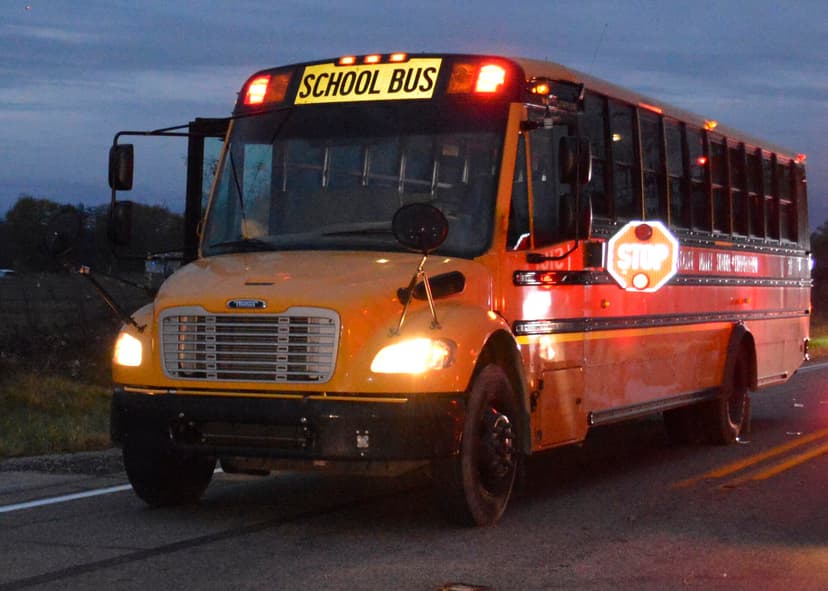
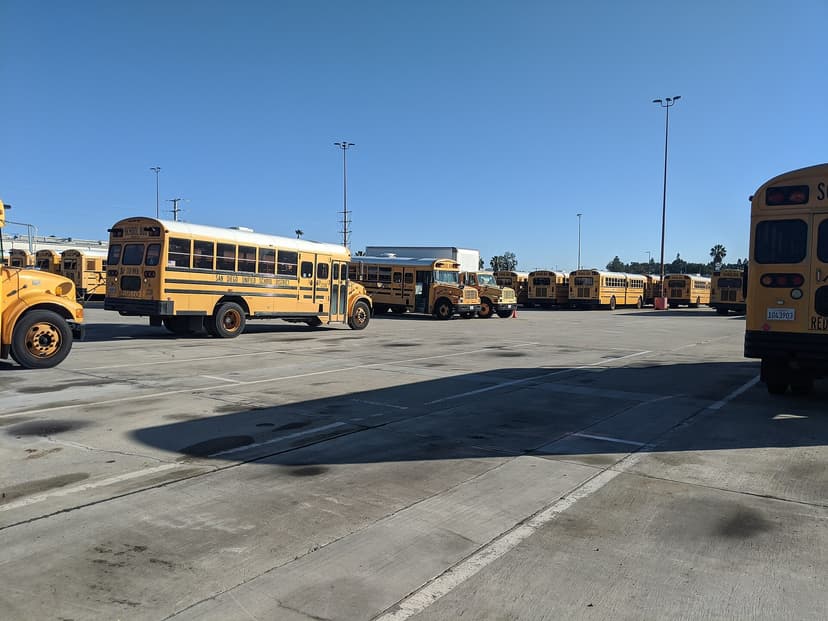
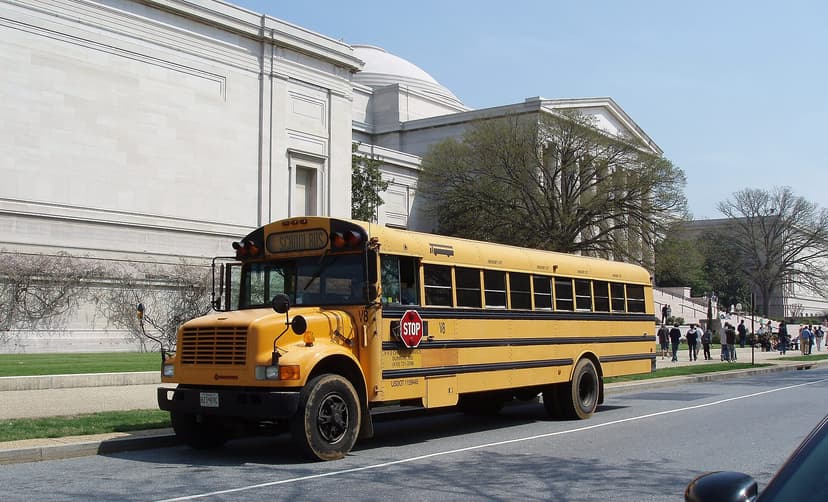
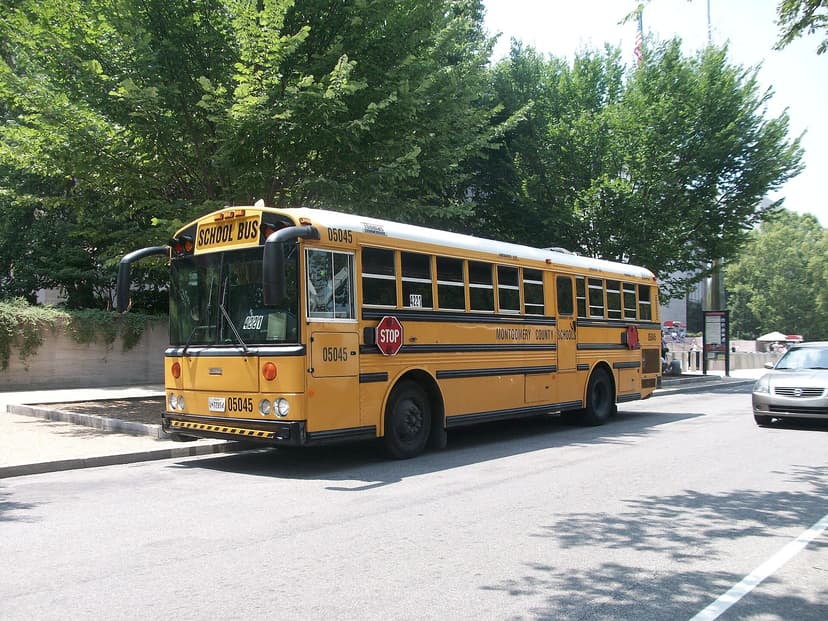
School buses in Washington DC - stop-arm safety signal, depot fleet, and city routes.
School Bus Conversions (Skoolies) & Used School Buses
Retired school buses - known as skoolies in the conversion community - are commonly converted into mobile homes, campers, tiny homes, and food trucks. A used school bus typically has a diesel engine with 150,000–300,000+ miles but many years of life remaining, because school bus engines are built for commercial duty cycles.
Common conversion types: full-time living skoolie, weekend camping skoolie, tiny office on wheels, mobile classroom, food truck, and party bus. Popular platforms for buying used school buses include Government Fleet auctions, eBay, and Bus Conversion Magazine classifieds.
The school bus collector and enthusiast community focuses on vintage models including the late-1950s Wayne Crusader, 1970s Blue Bird All American, and 1980s Carpenter school buses. Scale model school buses are popular collectibles at 1:64 (Matchbox, Hot Wheels) and 1:87 (HO scale) sizes.
Metro Access by Ward in DC
Most DC high schools and many middle schools are within walking distance of a Metrorail station. Metrobus covers every neighborhood in the District. Use the ward pages to find schools and their nearest transit options.
Walking & Safe Routes to School
DC has extensive Safe Routes to School (SRTS) signage near elementary schools and a growing network of protected bike lanes. The District Department of Transportation (DDOT) administers the SRTS program, providing engineering improvements (sidewalks, crossing signals), education, and enforcement near 200+ DC schools. Walking and cycling are encouraged for students within 1 mile of their school.
Capital Bikeshare stations are available near many DC high schools and middle schools. The DC Department of Parks and Recreation also offers Safe Routes DC walking school buses - supervised group walks where adult volunteers escort students from a meeting point to school.
School Bus FAQ
Does DCPS provide a school bus for my child?
DCPS provides yellow school bus service only to students whose IEP includes transportation as a related service. General-education students use Kids Ride Free (free Metro) instead. Contact DCPS Transportation at 202-671-0500 to confirm eligibility.
What is the Kids Ride Free school bus alternative in DC?
Kids Ride Free gives every DC-enrolled student free Metrorail, Metrobus, and DC Circulator rides on school days via a registered SmarTrip card. Register at kidsridefree.dc.gov.
How long is a school bus?
A full-size Type C or D school bus is 35–40 feet long. Mini school buses (Type A) are 20–25 feet. Width is typically 7.5–8 feet, not including mirrors.
How many seats does a school bus have?
A standard Type C school bus has 48–72 passenger seats. The most common configuration is 72 passengers. Type D transit-style buses can carry up to 90. Mini Type A buses seat 12–30.
Why is a school bus yellow?
School buses are painted National School Bus Glossy Yellow (NSGBY), standardized in 1939. The color is visible in peripheral vision 1.24× faster than red, making it the safest color for low-light conditions.
What brand school buses does DCPS use?
DCPS uses a mixed fleet that includes Blue Bird and IC Bus models for its yellow school bus service. The exact mix varies by year and contract.
How much does a school bus cost to buy?
New school buses cost $80,000–$130,000. Electric school buses cost $250,000–$375,000 but federal grants can offset 100% of the incremental cost. Used school buses sell for $3,000–$30,000 depending on age and mileage.
How do I get a CDL school bus license?
You need a CDL Class B with Passenger (P) and School Bus (S) endorsements. Requirements: written knowledge test, pre-trip inspection test, road skills test in a school bus, FBI background check, and DOT medical exam.
Are school buses safe?
School buses are the safest way for children to travel to school. NHTSA data shows school buses are about 70 times safer per mile than passenger cars. School buses have a strong safety record with reinforced sides, high seat backs, and rollover protection.
What is a skoolie school bus?
A skoolie is a retired school bus converted into a mobile home, camper, or tiny house. Used school buses sell for $3,000–$15,000 and are popular for full-time living and travel. The conversion community is active on Reddit (r/skoolies) and YouTube.
How many school buses are there in the United States?
The US has approximately 500,000 school buses transporting about 26 million students every school day - more students than all US airlines and public transit systems combined.
What school bus route serves my neighborhood in DC?
DCPS school bus routes are assigned based on IEP, not neighborhood. General-education students should use Kids Ride Free Metro. Use the ward pages on DCSchools.com to find your nearest schools and Metrorail stations.
Can charter school students get a school bus in DC?
DC charter school students do not receive yellow school bus service from DCPS. Charter school students are eligible for Kids Ride Free Metro cards if enrolled in a DC charter school.
What is the difference between a school bus and a coach bus?
A school bus is purpose-built for student transport with flat-backed seats, no overhead luggage bins, and National School Bus Yellow paint. A coach (motorcoach) bus has reclining seats, luggage compartments, and is used for long-distance travel.
Are there electric school buses in DC?
DCPS has piloted electric school buses and applied for EPA Clean School Bus Program funding, which provides grants for transitioning diesel buses to electric. Blue Bird and Thomas Built are the leading electric school bus manufacturers.
School Bus Industry Statistics
Fleet size, ridership, electric transition, safety data, and market trends for the US school bus industry.
Read: US School Bus Industry 2026 Statistics →